
Aortic Aneurysm: What Every Patient Should Know
The aorta is the largest blood vessel in the body, carrying blood from the heart to everywhere else. Sometimes a weak spot develops in its wall and bulges outward — this is called an aortic aneurysm. Most aortic aneurysms cause no symptoms at all and are found by chance during a scan for something else. The good news: when caught early, an aortic aneurysm can almost always be monitored safely or treated with excellent results.
What Is an Aortic Aneurysm?
Think of the aorta as a garden hose under constant pressure. If one section of the wall weakens, it balloons outward the same way a worn spot in a hose bulges under water pressure. That bulge is the aneurysm. It doesn’t hurt on its own, but it can grow larger over time, and a large aneurysm carries a risk of rupture — which is why doctors keep an eye on it.
There are two main types, named for where they occur:
● Abdominal aortic aneurysm (AAA) — occurs in the section of the aorta that runs through the abdomen. This is the most common type.
● Thoracic aortic aneurysm (TAA) — occurs in the section of the aorta that runs through the chest.
What Causes an Aortic Aneurysm?
An aortic aneurysm develops when the aortic wall gradually loses its strength and elasticity. Several factors raise that risk:
● Atherosclerosis — hardening and narrowing of the arteries
● High blood pressure (hypertension), which puts extra strain on the vessel wall
● Smoking — the single biggest modifiable risk factor for aortic aneurysm
● Age over 65
● Being male — men are diagnosed with AAA far more often than women
● A family history of aortic aneurysm (a parent or sibling who had one)
● Inherited connective tissue disorders, such as Marfan syndrome or Ehlers-Danlos syndrome
● Rarely, infection or inflammation affecting the aortic wall
Most aortic aneurysms are silent — they produce no symptoms until they are large, which is exactly why screening matters for people with risk factors. When symptoms do occur, they can include:
● A pulsing or throbbing feeling near the navel
● Deep, constant pain in the abdomen or side
● Back pain that doesn’t go away
Warning Signs of a Rupture (Medical Emergency)
A ruptured aortic aneurysm is life-threatening and needs emergency care immediately. Warning signs include:
● Sudden, severe pain in the abdomen or back
● Pain that spreads toward the hips or legs
● Dizziness, fainting, or a rapid heartbeat
● Clammy skin or sudden weakness
If you or someone near you has these symptoms, call emergency services right away. Do not drive yourself to the hospital.
How Is an Aortic Aneurysm Diagnosed?
Diagnosis is usually straightforward and painless:
● Duplex ultrasound — a painless scan and the first-choice test for both screening and follow-up monitoring
● CT angiography — a more detailed scan used to measure the aneurysm precisely and plan treatment
Who should be screened? Men aged 65 to 75 who have ever smoked, and anyone with a parent or sibling who had an aortic aneurysm, should ask their doctor about a one-time screening ultrasound — it takes only a few minutes and can catch a problem long before it becomes dangerous.
Aortic Aneurysm Treatment Options
Treatment depends mainly on the aneurysm’s size and how quickly it is growing.
Watchful Waiting for Small Aneurysms
Aneurysms smaller than about 5.5 cm in men (5 cm in women) are usually followed with regular ultrasound every 6 to 12 months rather than operated on right away. Controlling blood pressure, quitting smoking, and sometimes cholesterol-lowering medication (statins) all help slow the aneurysm’s growth.
Repair for Larger or Fast-Growing Aneurysms
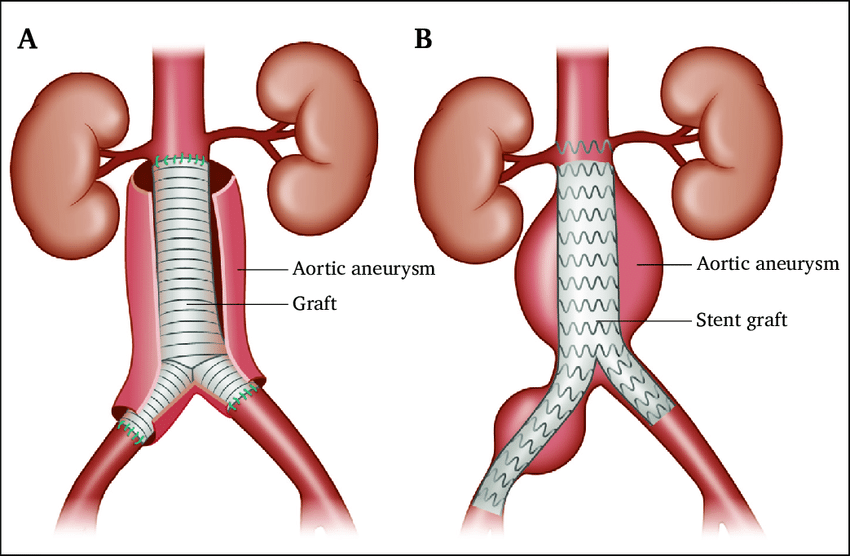
● Endovascular Aneurysm Repair (EVAR) — a covered stent graft is placed inside the aorta through a small incision in the groin. It is minimally invasive, with a shorter hospital stay and faster recovery than open surgery.
● Open surgical repair — the weakened section of the aorta is replaced with a graft. This approach is preferred for certain anatomies or when EVAR isn’t suitable.
Emergency Repair
If an aneurysm ruptures, emergency surgery or Endovascular repair is needed immediately to control the bleeding and repair the aorta. This is exactly why timely diagnosis and monitoring of a known aneurysm matter so much.
Can an Aortic Aneurysm Be Prevented?
While not every case can be prevented, these steps meaningfully lower the risk and slow the growth of an existing aneurysm:
● Quit smoking — the most important single step
● Keep blood pressure and cholesterol under control
● Stay physically active
● Follow a heart-healthy diet
● Get regular check-ups if you have any of the risk factors above
When to See a Vascular Surgeon
If you have risk factors for aortic aneurysm, have a family history, or an aneurysm was found incidentally on a scan done for another reason, it is worth having it properly evaluated. Jordan Vascular Clinic in Amman offers duplex ultrasound screening and specialized consultation to assess and monitor aortic aneurysm, so you can get clear answers about your risk and the right next step.
Frequently Asked Questions
What size aortic aneurysm is considered dangerous?
Doctors generally consider repair once an aneurysm reaches about 5.5 cm in men or 5 cm in women, if it is growing quickly (more than 0.5 cm in six months), or if it is causing symptoms. The decision is always individualized to the patient.
Can an aortic aneurysm be treated without surgery?
There is no medication that reverses an aneurysm once it is large, but small aneurysms can often be safely watched for years through regular monitoring and risk-factor control, and many people never need surgery at all.
How long can someone live with an aortic aneurysm?
With regular monitoring and good blood pressure control, most people with a known aneurysm live a normal life span. The real danger comes from a large aneurysm going undetected or untreated, which is why timely monitoring and repair matter so much.
Is aortic aneurysm surgery high risk?
Planned (elective) repair, especially with modern endovascular techniques (EVAR), is generally very safe. Emergency repair after a rupture carries much higher risk — which is exactly why catching an aneurysm early makes such a difference.
Is an aortic aneurysm the same as a heart attack?
No. An aortic aneurysm is a weakening and bulging of the aorta’s wall, while a heart attack is caused by a blocked coronary artery that supplies the heart itself. They are different conditions, though they share some of the same risk factors, such as smoking and high blood pressure.
This article is for general educational purposes and does not replace a consultation with a qualified physician. If you have risk factors for aortic aneurysm or are experiencing any of the symptoms above, please consult a vascular surgeon.