AV Fistula & dialysis access surgery in Amman: Expert Vascular Care
Dr. Omar Hamdallah specializes in advanced and complex access surgery techniques with excellent results.
The Vascular Lifeline: Expert Creation and Maintenance of Dialysis Access
When you or a loved one faces kidney failure and requires hemodialysis, establishing reliable, long-term access to the bloodstream is the first critical step. As specialized vascular surgeons, we focus on creating and maintaining a durable dialysis access—your lifeline—to ensure safe, efficient, and complication-free treatment.
At our Jordan Vascular clinic in Amman, Jordan, we serve patients from across the Kingdom and the wider region who require expert dialysis access care. Dr. Hamdallah has performed hundreds of AV fistula procedures and complex access revisions, making Jordan Vascular Centre a trusted destination for kidney failure patients and their nephrologists.
Why is a Vascular Surgeon Essential for Dialysis Access?
A successful dialysis access depends entirely on the health of your blood vessels. Vascular surgeons possess the deep knowledge of anatomy and advanced surgical skills required to:
Map and Assess: Perform detailed pre-operative vascular ultrasound mapping to identify the best artery and vein.
Create the Access: Surgically connect vessels with the highest chance of long-term success (e.g., creating a functioning AV Fistula).
Manage Complications: Perform timely maintenance and repair procedures, such as angioplasty and stenting, to keep the access functioning.
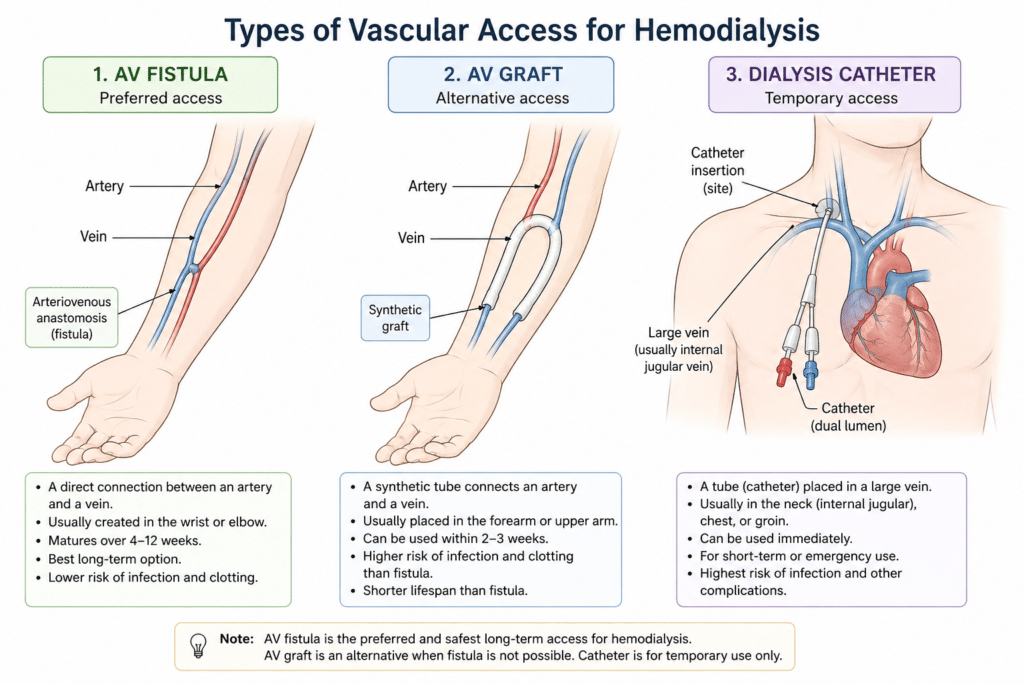
The Three Types of Dialysis Access (Fistula, Graft, and Catheter)
The choice of access is crucial for your long-term health and is always made based on the principle: Fistula First, if possible.
1. The Gold Standard: Arteriovenous (AV) Fistula Creation
This is the preferred, most permanent type of dialysis access.
Procedure: A direct surgical connection between your native artery and vein (typically in the arm).
Benefit: The lowest rates of infection and clotting, offering the longest functional lifespan. Requires a maturation period of 2-3 months before the first use.
2. Alternative Access: Arteriovenous (AV) Graft
Used when a patient’s natural veins are unsuitable for a fistula.
Procedure: A synthetic, biocompatible tube is used to bridge the connection between the artery and vein.
Benefit: Ready for use quickly (often within 2-3 weeks).
3. Temporary Access: Dialysis Catheters
Used for urgent dialysis needs or while a permanent access site is maturing.
Procedure: A flexible tube placed into a large vein, usually in the neck or chest.
Warning: Due to the highest risk of infection and central vein damage, we work diligently to transition patients to a permanent AV fistula as quickly as possible.
What to Expect: Your Dialysis Access Journey
Initial Consultation & Ultrasound Mapping
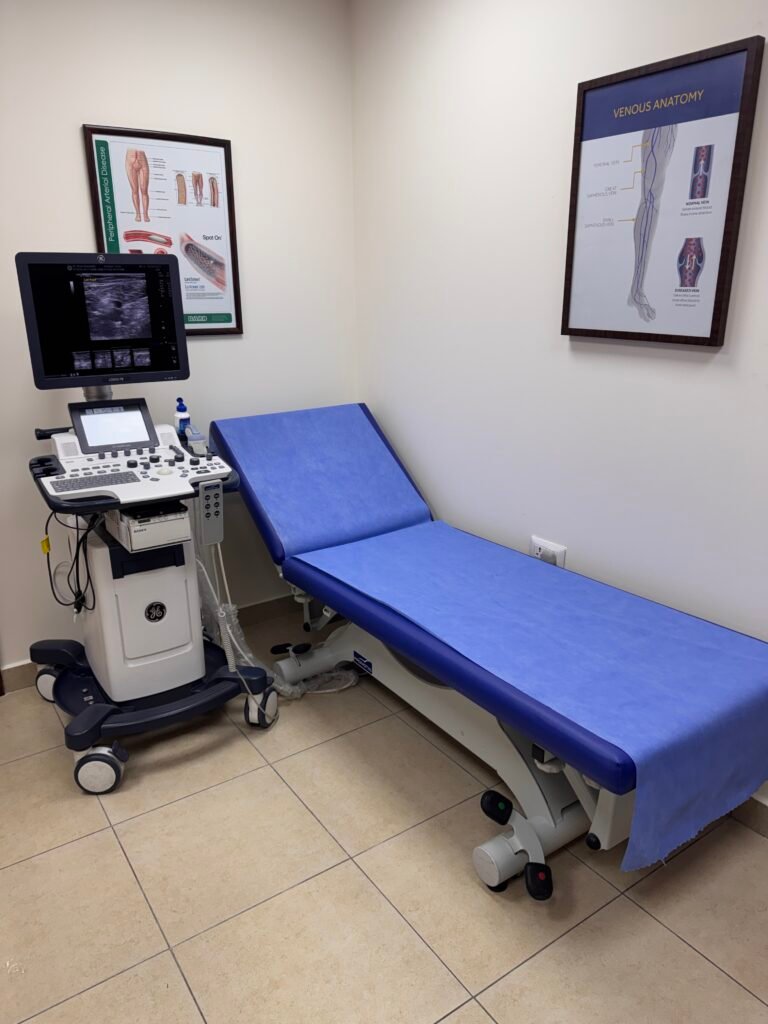
Your first visit includes a thorough clinical assessment and a dedicated vascular ultrasound mapping session. This step identifies the best vessels in your arm for a durable fistula — and is the single most important factor in long-term success.
The Surgery
AV fistula creation is typically performed under local anaesthesia as a day-case procedure, taking 1–2 hours. Most patients return home the same day.
Maturation & Monitoring
Over the following 6–8 weeks, your fistula will mature and strengthen. We monitor progress with follow-up ultrasound to confirm the access is developing correctly before your dialysis team uses it.
Long-Term Access Care
Our team remains available for any access complications — clotting, narrowing, or infection — with rapid intervention to protect your lifeline.
jjklkl
Frequently Asked Questions About Dialysis Access
How long does AV fistula surgery take?
The procedure typically takes 1–2 hours under local anaesthesia and is performed as a day-case surgery with no overnight stay required.
When can I start dialysis after fistula creation?
An AV fistula requires a maturation period of approximately 6–8 weeks before it is ready for use. We monitor your fistula during this time to ensure it is developing well.
What if my veins are not suitable for a fistula?
If your veins are too small or fragile, an AV graft using a synthetic tube is an excellent alternative and can typically be used within 2–3 weeks of surgery.
How do I know if my fistula is working?
A working fistula produces a gentle vibration called a “thrill” that you can feel by placing your fingers over it. If this disappears, contact us immediately as it may indicate a blockage requiring urgent treatment.
Do you treat patients from outside Amman?
Yes. We regularly see patients referred from across Jordan and neighbouring countries. Contact us to arrange a consultation.
What services do we offer?
Clotting (Thrombosis): We offer rapid, minimally invasive procedures like Thrombectomy to remove clots and restore blood flow to save the access.
Stenosis (Narrowing): We use Angioplasty and Stenting to widen the narrowed vessel segment. Infection: Prompt medical and surgical management to treat the infection before it compromises the access.
Schedule our Dialysis Access Consultation
If you are preparing for hemodialysis or need evaluation for a failing dialysis access site, schedule a consultation with our expert vascular surgery team today. We are committed to providing you with the best chance for a successful, long-lasting AV fistula.