![Dr Omar Hamdallah الدكتور عمر نادر يونس حمدالله [Dictation ended]](https://jordanvascular.com/wp-content/uploads/2025/10/cropped-Untitled-1.png)
Peripheral Vascular Disease
Peripheral Vascular Disease (PVD) Treatment by Dr. Omar Hamdallah Advanced Care in Amman, Jordan
What is Peripheral Vascular Disease (PVD)?
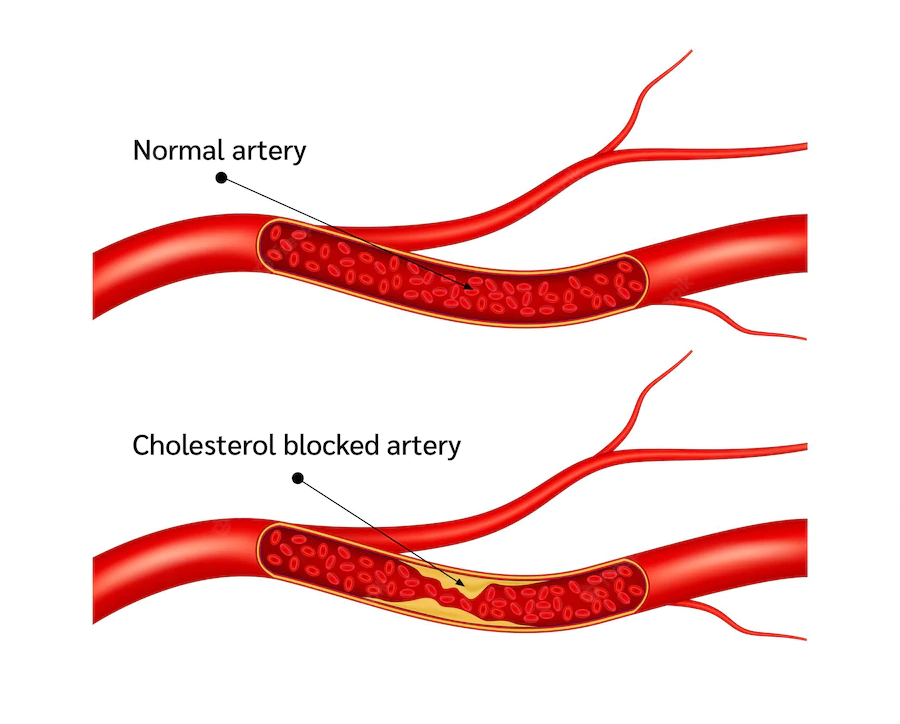
Peripheral Vascular Disease, commonly affecting the arteries and veins outside the heart and brain, is a circulation disorder caused by narrowed or blocked blood vessels. This condition often reduces blood flow, especially to the legs, and can result in discomfort, functional limitations, or even critical health complications if untreated.
Comprehensive Diagnosis at Jordan Vascular Clinic
Our clinic utilizes advanced diagnostic tools to identify PVD and assess its severity accurately:
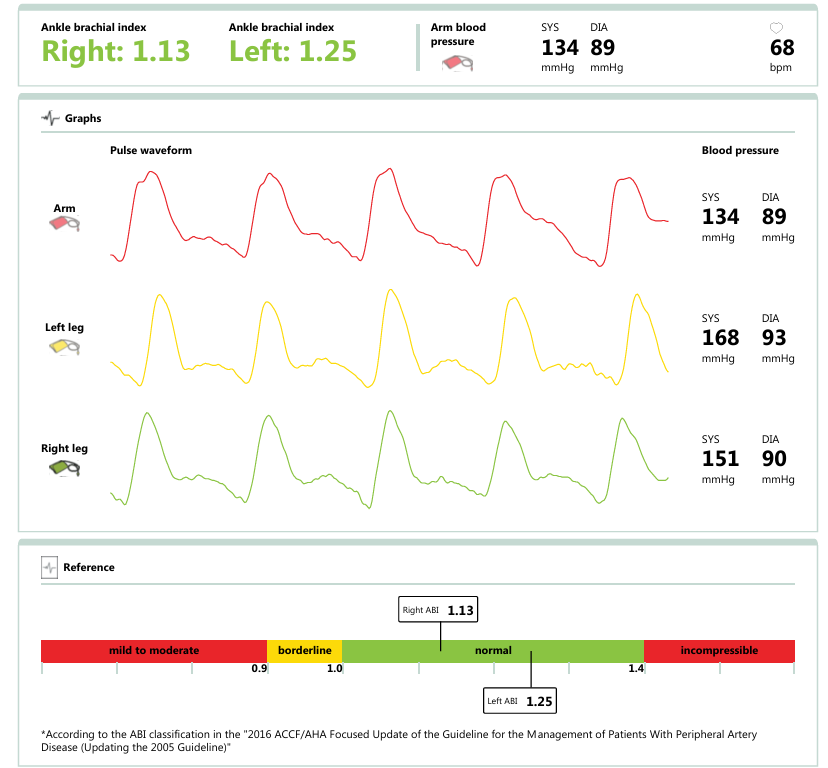
Ankle-Brachial Index
Ankle-Brachial Index (ABI): A non-invasive test to measure blood flow in the legs by comparing blood pressure in the arms and ankles.
Doppler Ultrasound
Doppler Ultrasound: Real-time imaging of blood flow in arteries and veins to detect blockages or narrowing.
Angiography
Angiography: Using contrast dye and imaging to provide a detailed view of your blood vessels.
CTA
CTA: Using contrast dye and imaging to provide a detailed view of your blood vessels in few seconds.
MRA
Magnetic Resonance Angiography (MRA): High-resolution imaging to evaluate the health and functionality of blood vessels.
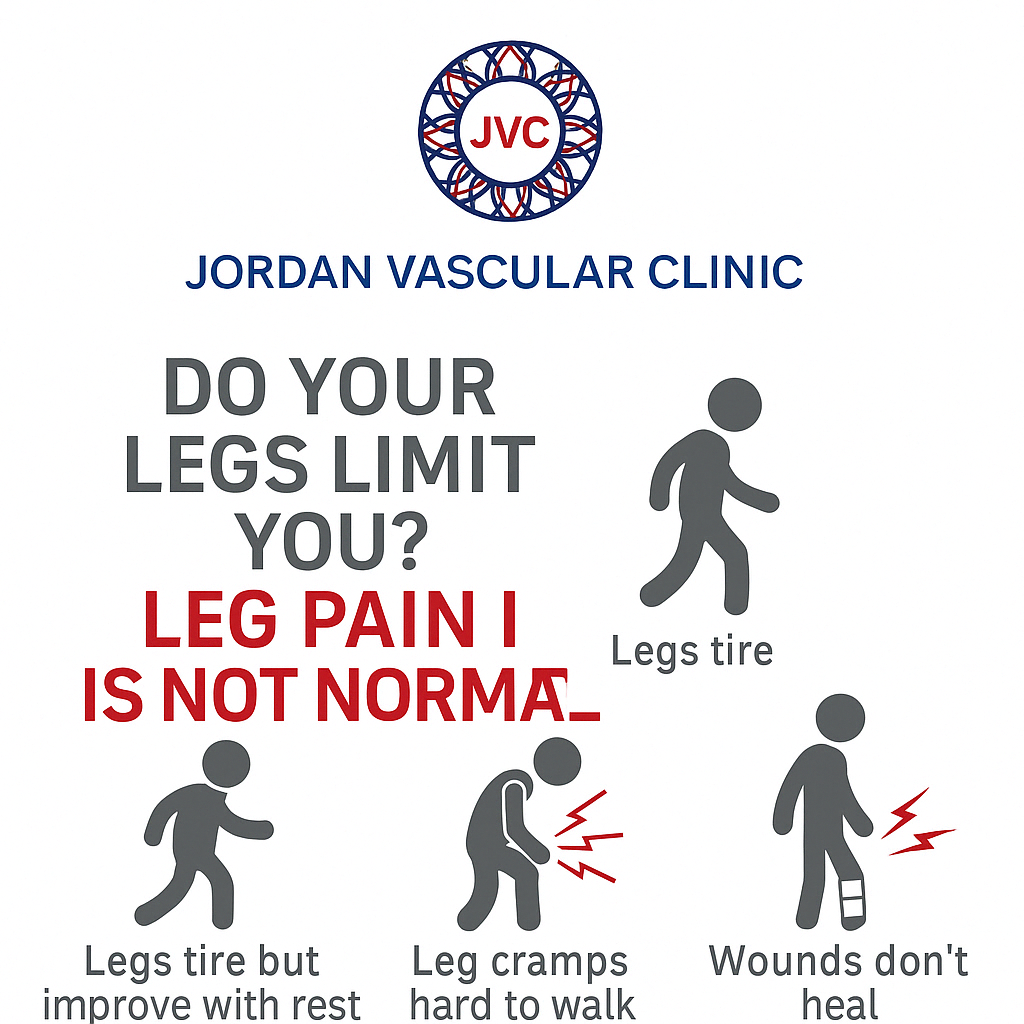
What are the symptoms of PAD
Early recognition of PVD symptoms is vital for timely intervention. Common signs include:
Leg Pain During Activity (Intermittent Claudication): Pain or cramping in the legs during walking or exercise that eases with rest.Cold or Pale Limbs: Reduced circulation may cause your legs or feet to feel cold or change color.
Non-Healing Wounds or Ulcers: Sores on the legs or feet that do not heal.
Skin and Hair Changes: Shiny skin, discoloration, or hair loss on the legs.
Persistent Pain: Burning or aching pain in the feet, particularly noticeable at night or when lying down.
Endovascular Procedures
Our endovascular procedures are minimally invasive and highly effective for treating PVD without major surgery. These include:
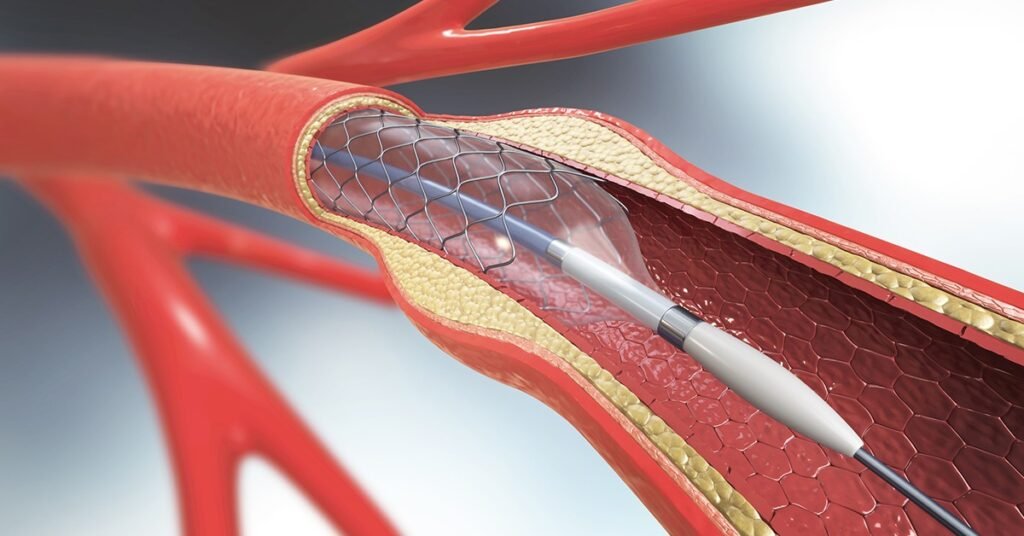
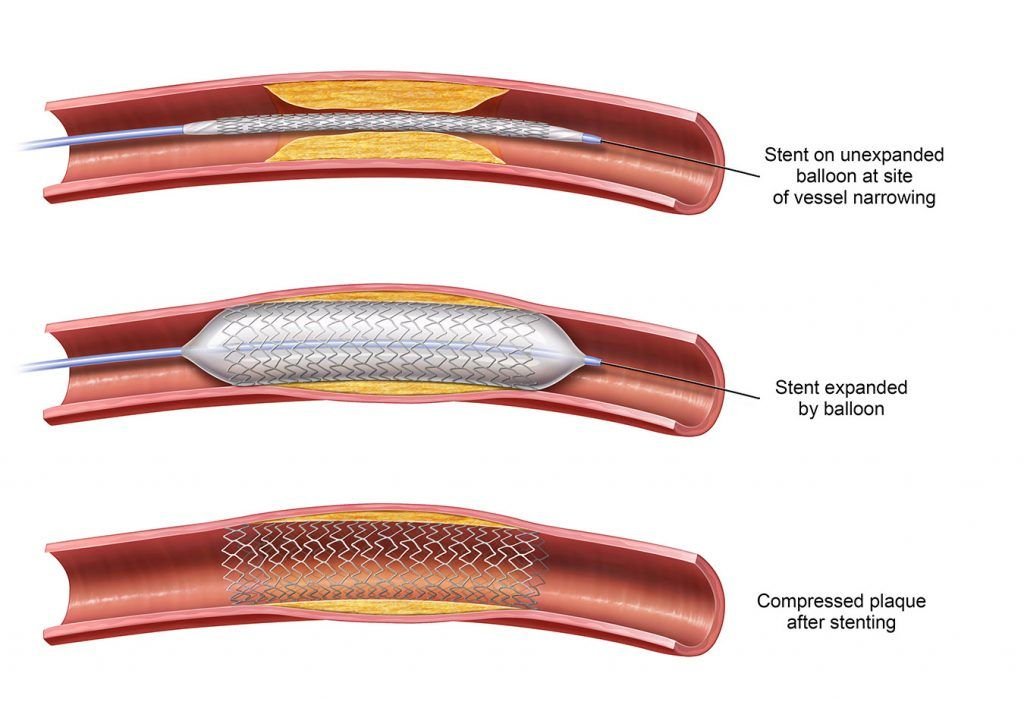
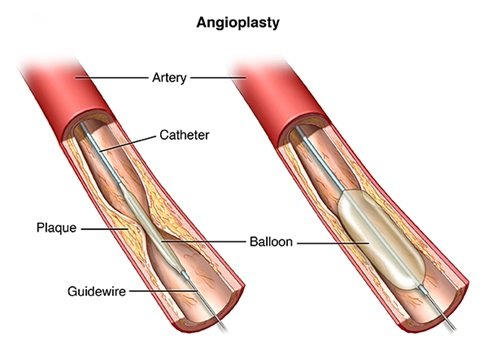
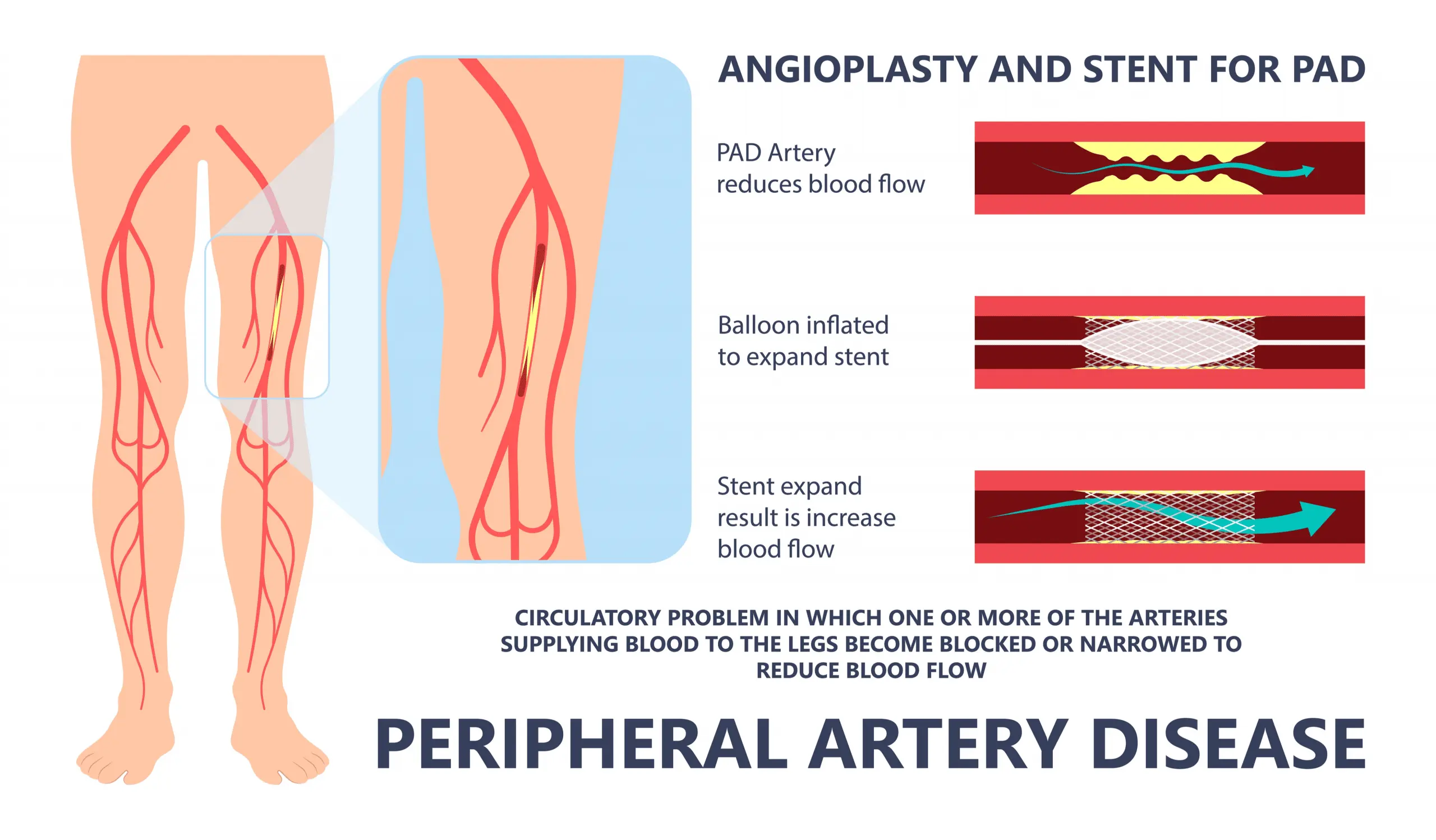
Angioplasty: A balloon catheter is inserted into the narrowed artery and inflated to restore blood flow. This technique is often combined with stenting.
Stenting: A small mesh tube is placed within the artery to keep it open, ensuring continuous blood flow.
Atherectomy: Advanced tools remove plaque buildup from the arterial walls, restoring healthy circulation.
Surgical Interventions
For severe cases of PVD, where endovascular procedures may not suffice, we offer surgical treatments to address complex conditions:
Bypass Surgery: A graft is created using a blood vessel or synthetic material to reroute blood flow around a blocked artery. This procedure is particularly effective for long or severely narrowed segments of arteries.
Thrombectomy or Embolectomy: Surgical removal of clots or blockages to immediately restore blood flow.
WHY CHOOSE DR OMAR HAMDALLAH
Expert Care:
Dr. Omar Hamdallah has years of experience in specialized vascular medicine.
Modern Techniques:
We offer minimally invasive endovascular treatments and state-of-the-art surgical solutions.
Patient-Centric Approach:
Your comfort, safety, and health are our highest priorities.